


Ownership Over Output: The Path to Creative Equity
- selyush chitikana
- Jan 21
- 5 min read

🎧 Listen to this article while you scroll.
You've spent years perfecting your craft. The shoots. The campaigns. The late nights editing. The early morning call times.
But here's the question that changes everything:
Do you own what you create?
At IncluHub, our founder built this ecosystem on a radical belief: that creative professionals deserve more than a day rate. They deserve equity. They deserve ownership. They deserve a seat at the table where decisions are made.
This isn't just philosophy. It's the operating system for a new kind of creative economy.
1. The Problem With "Output Only" Thinking
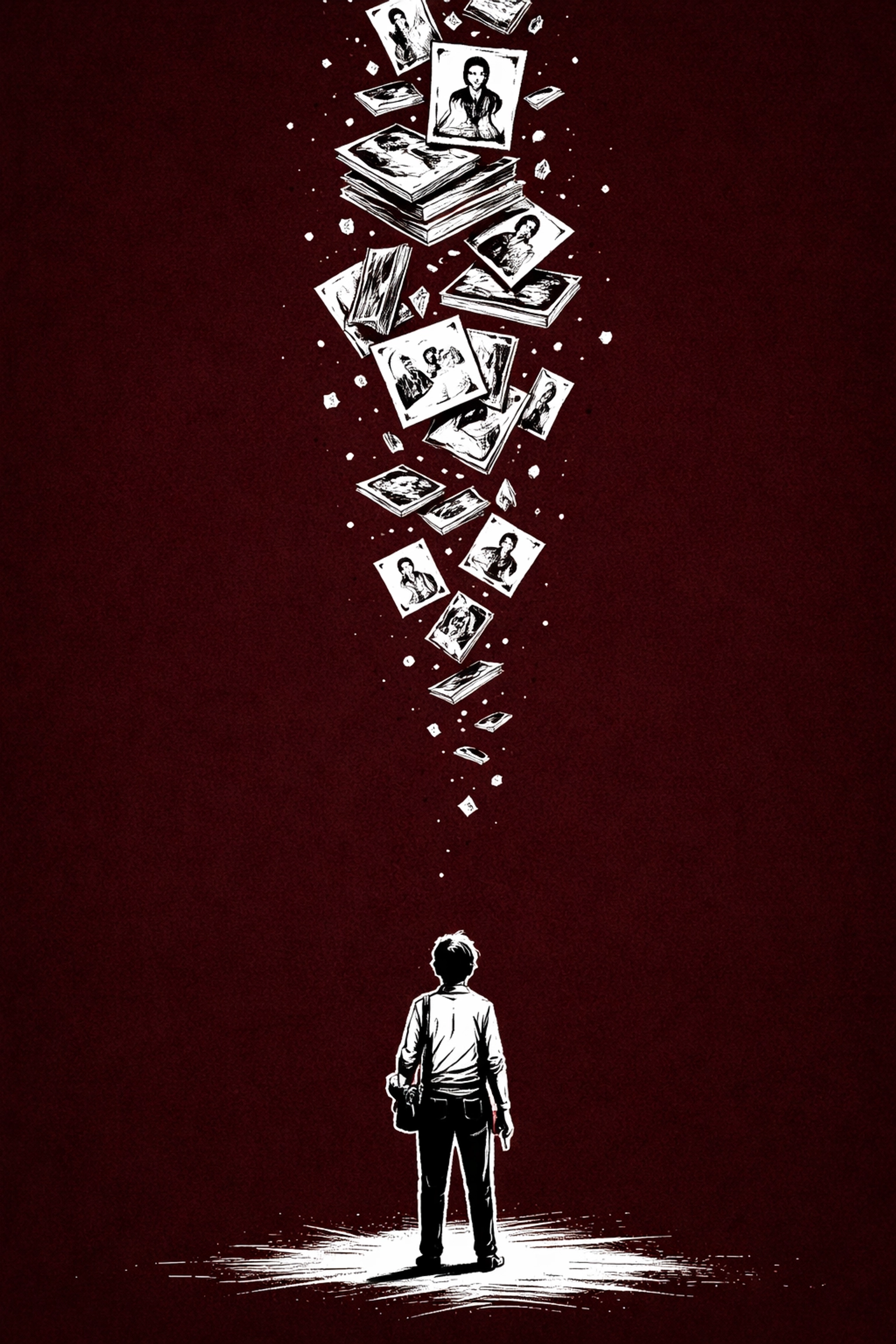
Most creative professionals are trapped in a cycle. You deliver work. You get paid. The work lives somewhere else, generating value for someone else, indefinitely.
You create the content, but the brand owns the IP
You build the audience, but the platform controls the algorithm
You bring the vision, but the agency keeps the client relationship
This model worked when creatives had no alternatives. But the landscape has shifted. The rise of the ownership economy means you no longer have to trade your talent for temporary transactions.
Creative equity isn't about getting paid more for the same arrangement. It's about restructuring the arrangement entirely.
2. What Creative Ownership Actually Means
Let's get specific. Creative ownership isn't a vague aspiration: it has concrete components that determine whether you're building something lasting or just renting out your skills.
Intellectual property control is the foundation:
Retaining rights to your work, or negotiating meaningful stakes in projects you contribute to
Having control over how your content is distributed, licensed, and monetized
Building a body of work that compounds in value over time, rather than disappearing into someone else's portfolio
Revenue stream ownership extends this further:
Diversifying income beyond single client relationships or platform dependencies
Minimizing the percentage taken by intermediaries, agencies, or platforms
Creating assets: courses, templates, brands: that generate income without your constant presence
At IncluHub, our founder recognized early that the traditional agency model was extractive. Talent came in, delivered value, and left with nothing but a check. The real equity: the relationships, the recurring revenue, the brand recognition: stayed with the agency.
That had to change.
3. The Transition: From Talent to Boss
Here's where most creatives get stuck. They know they want ownership. They understand the theory. But the leap from "hired talent" to "business owner" feels impossibly wide.
It doesn't have to be.
The transition happens in stages:
Stage one: You develop a specialty that makes you irreplaceable in your niche
Stage two: You build systems that allow you to deliver consistent results without burning out
Stage three: You start treating clients as partners, negotiating equity stakes, revenue shares, or long-term retainers instead of one-off payments
The creatives who make this transition don't just work harder. They work differently. They stop seeing themselves as service providers and start seeing themselves as entrepreneurs who happen to have creative skills.
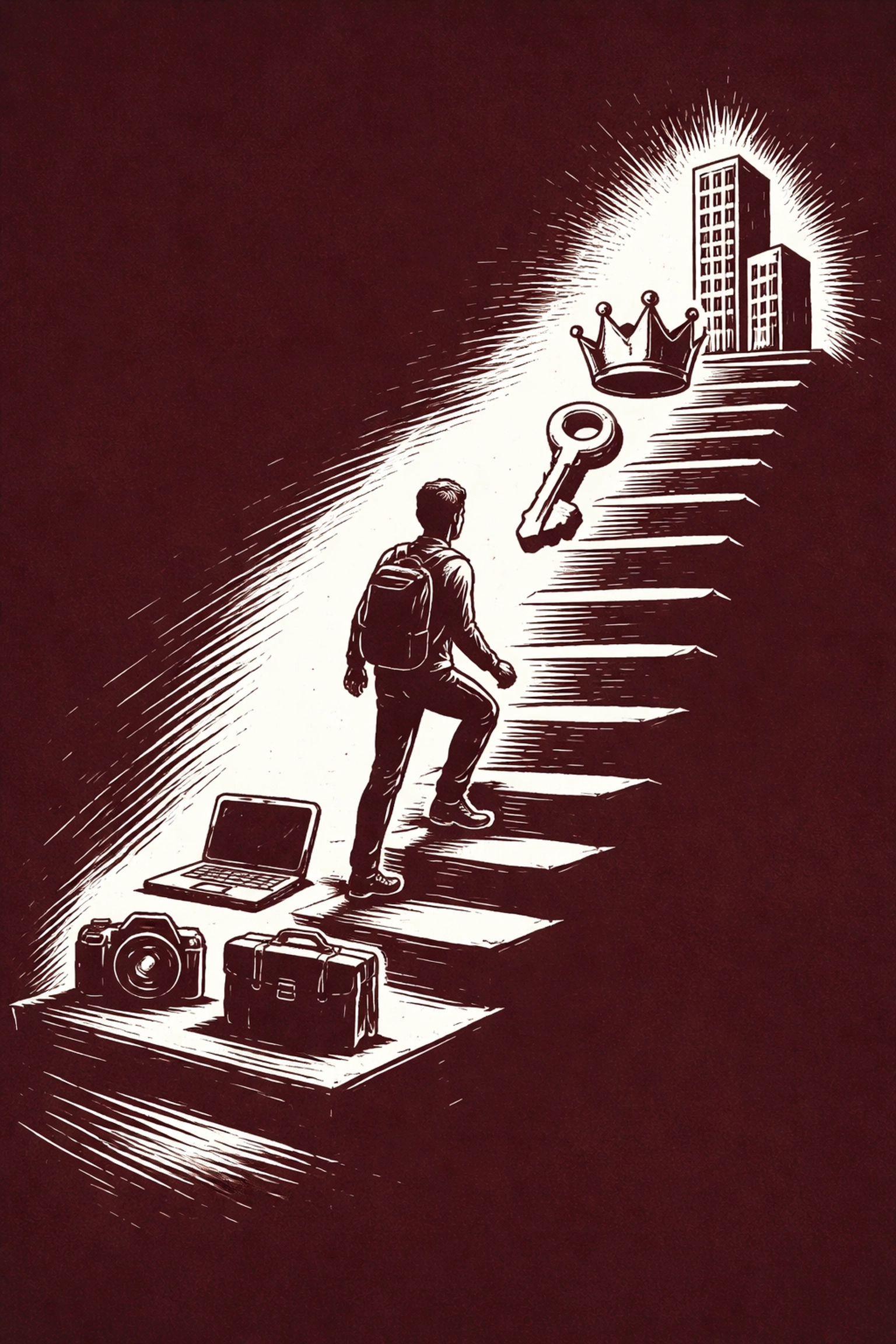
IncluHub was designed to accelerate this transition. Our founder envisioned a space where models, photographers, and creative professionals wouldn't just get booked: they'd get mentored, resourced, and positioned to build their own empires.
4. Revenue-Sharing: The IncluHub Model
Traditional agencies take their cut and move on. At IncluHub, we're building something different.
Revenue-sharing isn't charity. It's alignment. When creatives share in the upside of projects they contribute to, everyone's incentives point in the same direction.
Here's how it works in practice:
Project-based equity: On select campaigns, talent receives a percentage of revenue generated, not just a flat fee
Community ownership: As the IncluHub ecosystem grows, the creatives who built it share in that growth
Transparent accounting: You see where the money comes from and where it goes: no black boxes
This model attracts a different kind of creative. Not someone looking for quick cash, but someone building a career with compounding returns.
Our founder often says: "If your work creates value for ten years, you should benefit for ten years." That's not revolutionary: it's just fair. But in an industry built on exploitation, fairness feels revolutionary.
5. Mentorship: The Multiplier
Ownership without guidance is overwhelming. You can have equity in a project and still fail if you don't know how to leverage it.
That's why mentorship sits at the center of the IncluHub ecosystem.
What mentorship looks like here:
One-on-one guidance from creatives who've already made the transition from talent to entrepreneur
Tactical education on contracts, negotiations, pricing, and intellectual property: the business skills most creative programs skip entirely
Community support that holds you accountable and celebrates your wins
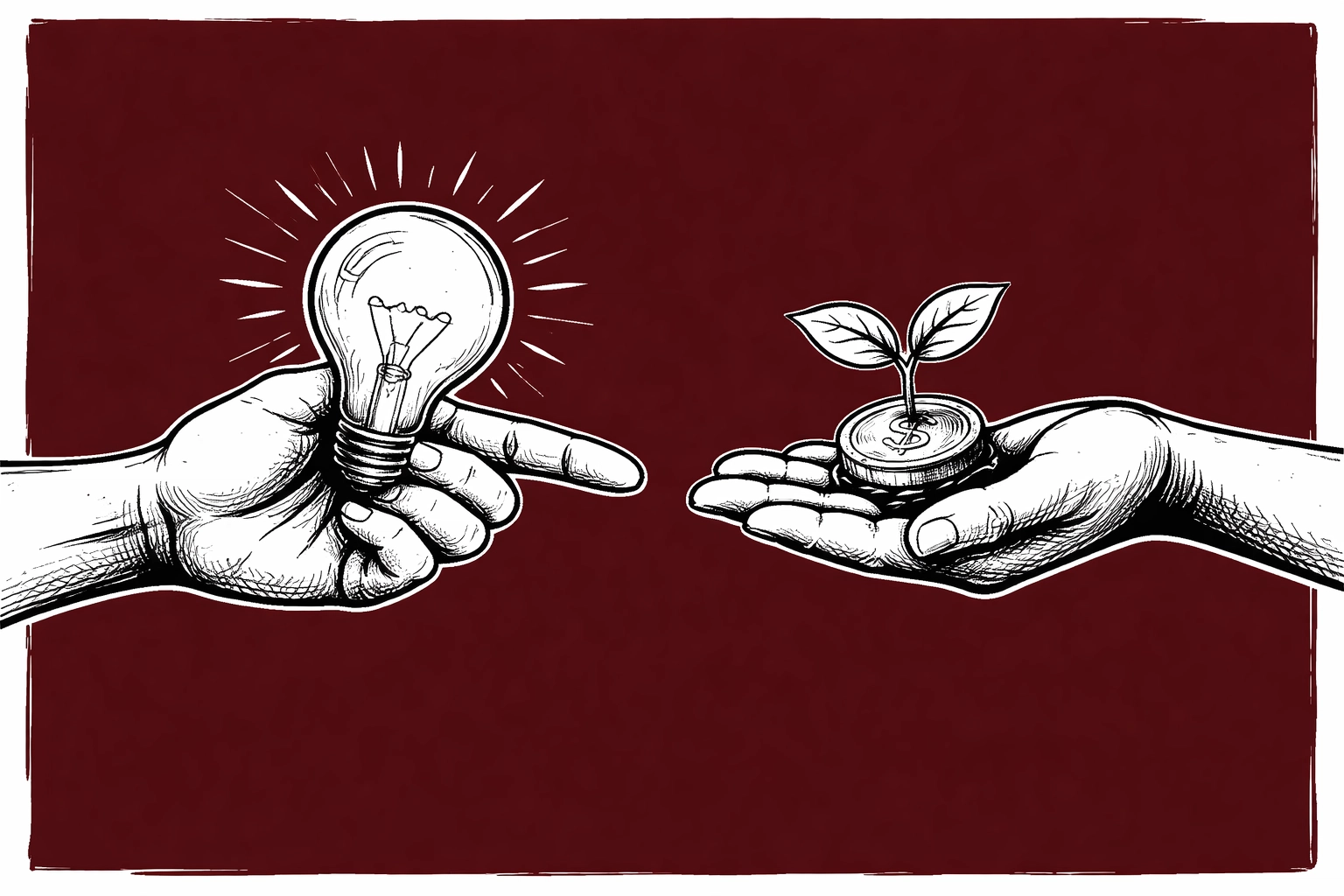
The goal isn't to create dependent relationships. It's to build independent creatives who can eventually mentor others. This is how ecosystems grow: not through extraction, but through multiplication.
Visit IncluEducation to explore resources on branding strategies, freelance success, and artist empowerment.
6. The Ownership Mindset Shift
Before you change your contracts, you need to change your thinking.
Ownership requires you to believe three things:
Your work has lasting value. Not just in the moment of delivery, but for years afterward.
You deserve to participate in that value. Not as a favor, but as a fundamental right.
You're capable of managing that value. With the right support, you can handle the business side.
Most creatives struggle with the third belief. They've been told: explicitly or implicitly: that their job is to create, not to manage. That business is someone else's department.
IncluHub exists to prove that wrong. Our founder built this community specifically for creatives who refuse to stay in their lane. Who want to understand the full lifecycle of value creation. Who are ready to own what they make.
Your Next Move
You've read this far. That means something is resonating.
Maybe you're tired of watching your work generate value for everyone except you. Maybe you're ready to stop trading time for money and start building something that lasts. Maybe you just want to be in a room with other creatives who think bigger.
Here's what you can do right now:
Audit your current arrangements. Who owns the IP? Who controls the revenue? Where does the value actually go?
Start one conversation. With a client, a collaborator, or a mentor: about how you might restructure for equity instead of just payment.
Join IncluHub. Not as a passive member, but as someone ready to build.
Explore our community at inclumodels.com and check out fashion career insights to start your transition.
The Takeaway
Creative equity isn't a perk. It's the future.
The creatives who thrive in the next decade won't be the ones who work the hardest. They'll be the ones who own the most: their IP, their revenue streams, their decisions.
IncluHub was built to make that transition possible. Our founder's vision was never just to manage talent. It was to liberate it.
Ownership over output.
That's the path.
Are you walking it?
Comments